USCIS Raises Premium Processing Fees Effective March 1, 2026 — What Employers and Applicants Need to Know

U.S. Citizenship and Immigration Services (USCIS) announced a significant update to its premium processing fee structure that will take effect March 1, 2026. The change is part of a biennial inflation adjustment permitted under the USCIS Stabilization Act and reflects inflation measured between June 2023 and June 2025.
Premium processing is an optional service that allows petitioners to receive a guaranteed adjudication action from USCIS within a specified timeframe (typically 15 calendar days) in exchange for an additional fee (Form I-907). It is widely used by employers and foreign nationals seeking expedited decisions for employment- and student-related petitions.
With rising costs and ongoing operational challenges, USCIS is aligning its fees with inflation to ensure the continued availability and reliability of premium processing services. Employers, attorneys, and applicants should plan ahead to avoid rejected filings due to incorrect fee payments.
New Premium Processing Fee Schedule (Effective March 1, 2026)
The table below shows the updated fees that must be included with a Form I-907 request postmarked on or after March 1, 2026:
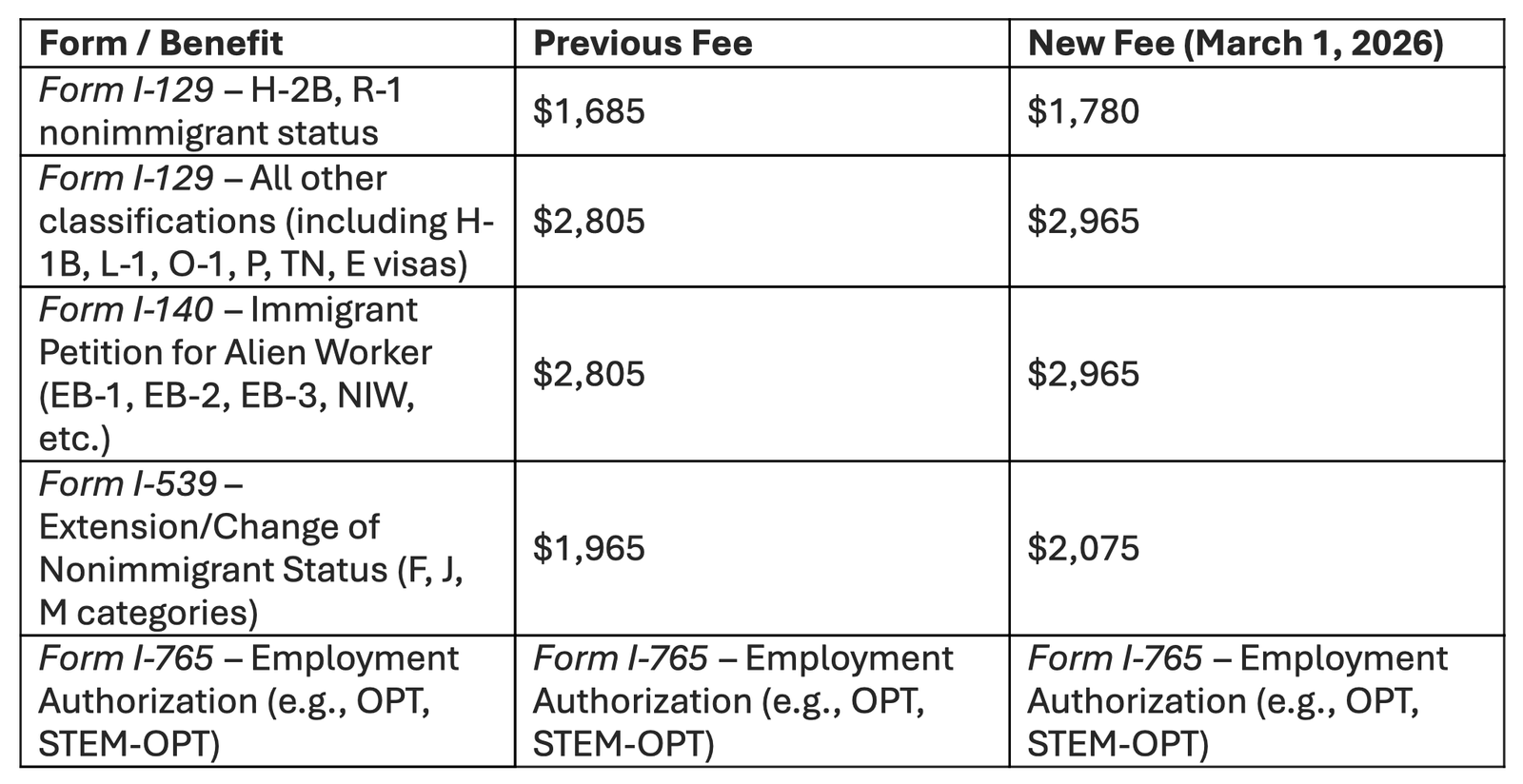
(Source: USCIS Alert, updated January 9, 2026)
Who Is Impacted
The fee increase affects a broad range of immigration benefit requests where premium processing is available, including:
- Employment-based petitions (e.g., H-1B, L-1, O-1)
- Immigrant worker petitions (I-140, including EB-1, EB-2 NIW, EB-3)
- Nonimmigrant status change/extension requests for students and exchange visitors
- Employment authorization applications like OPT and STEM-OPT
Key Things to Keep in Mind
- Correct Fee Timing Matters:If your Form I-907 is postmarked before March 1, 2026, the old fee still applies. Filings postmarked on or after March 1 must include the updated fee or risk rejection by USCIS.
- Plan Budgets Carefully:Organizations that rely heavily on premium processing (for strategic hiring, start dates, or immigration timelines) should update budgeting assumptions to incorporate these higher costs.
- Shipping and Postmark Dates Count:USCIS determines fee eligibility based on the postmarked date, not the received date, so timely delivery is critical.
Premium Processing Still Valuable
Despite higher fees, premium processing remains a valuable tool for employers and applicants facing tight timelines, backlogs, or urgent adjudication needs. The expedited response window can mean the difference between a seamless onboarding and costly delays, particularly in high-demand visa categories.
If you have questions about how this fee change impacts your case strategy — especially for high-volume or time-sensitive filings — working with experienced counsel can help ensure compliance and avoid costly mistakes.